Curating digital art exhibitions has become one of the most dynamic and demanding disciplines in contemporary cultural practice. As the art world undergoes rapid transformation driven by artificial intelligence, virtual reality, and blockchain technology, curators must navigate an entirely new set of creative, ethical, and technological landscapes. The shift from physical galleries to hybrid and virtual spaces isn’t merely logistical — it fundamentally redefines how art is contextualized, experienced, and preserved. This evolution presents both formidable challenges and unprecedented opportunities for curators willing to embrace innovation.
The Evolution of Digital Art Curation
Curatorial practice has always mirrored the tools and technologies of its era, but the digital revolution has accelerated change at an extraordinary pace. From early internet galleries in the 1990s to today’s AI-generated immersive environments, the role of the curator has expanded far beyond physical wall space.
| Era | Technology | Curatorial Shift |
|---|---|---|
| 1990s | Early internet | Online image archives, static web galleries |
| 2000s | Flash, streaming media | Interactive multimedia exhibitions |
| 2010s | Social media, mobile | Participatory, crowd-sourced curation |
| 2020s | AI, VR, NFTs, metaverse | Immersive, data-driven, decentralized curation |
From Traditional Galleries to Virtual Spaces
The migration from physical to digital is not simply a change of venue — it’s a paradigm shift. Traditional curation relied on controlled lighting, spatial flow, and material presence. Digital curation operates across screens, headsets, and browsers.
Traditional vs. Digital Curation:
- Physical space vs. infinite virtual environments
- Local audience vs. global reach
- Static installation vs. dynamic, updatable content
- Singular experience vs. personalized pathways
- Tangible artwork vs. file-based, software-dependent media
The Role of the Digital Curator Today
In an era of content overload, the digital curator functions as a mediator of meaning — filtering, framing, and contextualizing art for diverse online audiences. Core responsibilities now include:
- Selecting and sequencing digital artworks across platforms
- Managing metadata, accessibility, and digital rights
- Collaborating with developers, UX designers, and artists
- Ensuring long-term preservation of digital assets
- Engaging communities through social media and interactive tools
Key Challenges in Curating Digital Art Exhibitions
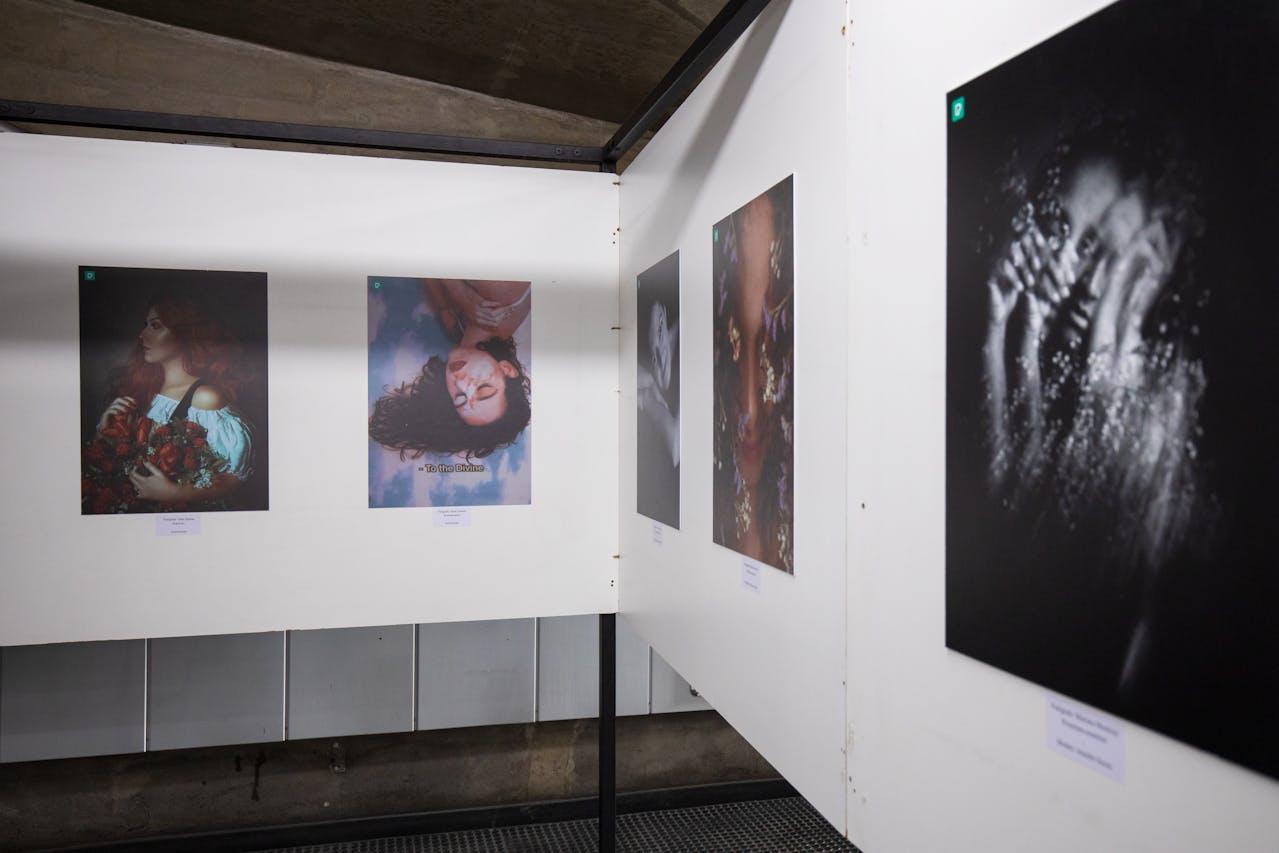
Digital curation introduces layers of complexity that traditional methods never required. Curators must simultaneously master art history, emerging technology, data ethics, and user experience design — a uniquely demanding skill set.
| Challenge | Impact Level |
|---|---|
| Technological obsolescence | High |
| Digital preservation | Critical |
| Audience engagement online | Medium–High |
| Copyright and AI authorship | High |
| Accessibility across devices | Medium |
Technological Complexity and Rapid Change
The tools curators rely on — VR headsets, AR overlays, generative AI systems — evolve faster than institutional frameworks can adapt. Common technical challenges include:
- Incompatibility between exhibition software versions
- Hardware dependency for immersive experiences
- High production costs for interactive installations
- Limited technical staff within traditional art institutions
Preservation and Longevity of Digital Art
Unlike oil paintings, digital works face software obsolescence, file format decay, and server dependency. This is one of the most urgent unsolved problems in the field.
| Risk | Solution |
|---|---|
| File format obsolescence | Migrate to open, standardized formats |
| Platform shutdown | Maintain local and cloud backups |
| Software dependency | Document technical environment at creation |
| Link rot | Use persistent identifiers (DOI, ARK) |
Audience Engagement in Virtual Environments
Replicating the visceral, embodied experience of a physical gallery online remains elusive. Key engagement barriers include:
- Lack of physical presence and spatial memory
- Screen fatigue and shortened attention spans
- Limited haptic or sensory feedback
- Difficulty creating emotional intimacy with digital objects
Authorship, Ownership, and Ethical Concerns
The rise of AI-generated art and NFTs has introduced complex legal and philosophical dilemmas:
- Who owns AI-generated artwork — the programmer, the prompt writer, or the algorithm?
- How are resale royalties enforced in decentralized blockchain markets?
- Can digital copies be considered “originals”?
- What constitutes cultural appropriation in algorithmically trained datasets?
Opportunities Created by Digital Exhibition Spaces
Despite these challenges, digital formats unlock creative and curatorial possibilities that were unimaginable in traditional gallery contexts. The Smithsonian Institution’s open-access digitization initiative offers a landmark example of how institutions can democratize cultural heritage at scale.
| Dimension | Traditional Exhibitions | Digital Exhibitions |
|---|---|---|
| Geographic reach | Local/regional | Global |
| Cost to attend | Travel + entry fees | Free or minimal |
| Interactivity | Passive viewing | Participatory, immersive |
| Personalization | One-size-fits-all | Algorithm-driven pathways |
| Update frequency | Fixed installation | Real-time updates possible |
Global Accessibility and Democratization
Digital platforms dissolve geographic and economic barriers to art access. Key benefits include:
- Exhibitions available in multiple languages simultaneously
- Free or low-cost access for underserved communities
- Disability-friendly navigation and audio descriptions
- Archiving of exhibitions for perpetual public access
Immersive and Interactive Experiences
VR, AR, and mixed reality enable curators to build environments impossible in physical space:
- Walk through a digitally reconstructed ancient ruin alongside contemporary art
- Interact with generative installations that respond to viewer movement
- Experience artist interviews embedded within the exhibition environment
- Collaborate with other visitors in shared virtual galleries
Data-Driven Curation and Personalization
Analytics tools transform passive visitors into active data points that improve curatorial decision-making.
| Metric | Curatorial Use Case |
|---|---|
| Dwell time per artwork | Identify high-engagement pieces |
| Navigation paths | Optimize exhibition flow |
| Demographic data | Tailor programming and outreach |
| Click-through rates | Measure interpretive text effectiveness |
New Artistic Formats and Media
Emerging digital formats are redefining what “art” can be:
- Generative art created through algorithms and code
- NFT-based works with built-in provenance and ownership records
- AI-collaborative pieces merging human intent with machine output
- Live-coded performances presented as exhibition events
Curatorial Strategies for Successful Digital Exhibitions
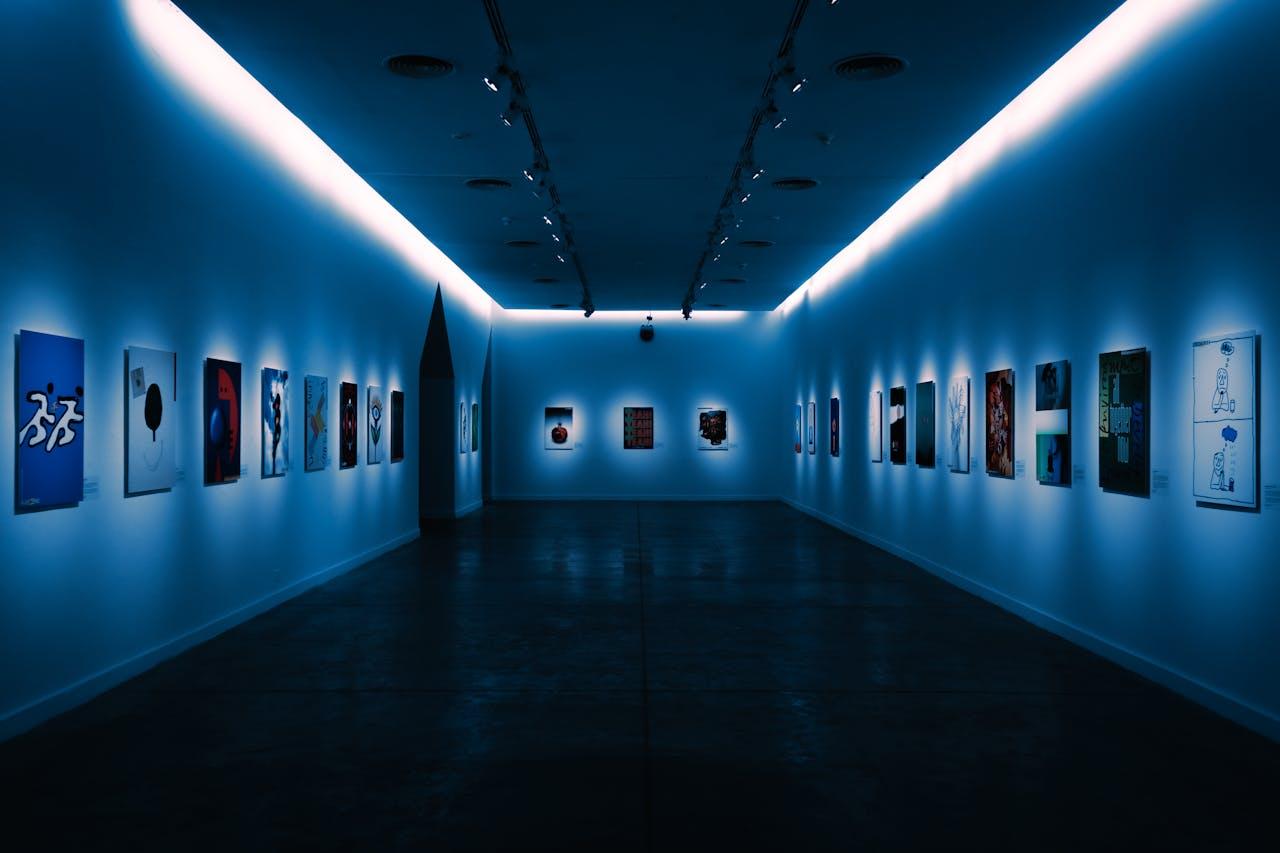
Leading digital curators share common frameworks built around user experience, narrative coherence, and interdisciplinary collaboration.
Exhibition Planning Checklist:
- Define target audience and accessibility needs
- Establish preservation protocols before launch
- Design non-linear narrative pathways
- Test across multiple devices and browsers
- Build in interactive and social sharing elements
- Create both physical and digital touchpoints where possible
- Document all technical dependencies for future archiving
Human-Centered Design in Digital Exhibitions
UX principles borrowed from product design now inform curatorial practice:
- Prioritize intuitive navigation over aesthetic complexity
- Ensure WCAG accessibility compliance for all users
- Design for mobile-first, given dominant smartphone usage
- Conduct user testing before public launch
Hybrid Exhibition Models
| Format | Strengths | Limitations |
|---|---|---|
| Fully physical | Sensory richness, intimacy | Geographic limits, cost |
| Fully digital | Scale, accessibility | Engagement depth, tech barriers |
| Hybrid | Best of both worlds | Complex logistics, higher production cost |
The Role of Emerging Technologies in Digital Curation
| Technology | Application in Curation |
|---|---|
| Artificial Intelligence | Artwork selection, sentiment analysis, chatbot guides |
| Virtual Reality | Fully immersive exhibition environments |
| Augmented Reality | Overlaying digital content on physical spaces |
| Blockchain | Provenance verification, NFT marketplaces |
| Machine Learning | Audience personalization, recommendation engines |
Blockchain offers curators new tools for verifying authenticity and managing digital ownership, though limitations remain around environmental impact and market volatility.
Future Trends in Curating Digital Art Exhibitions
| Trend | Timeline | Implication |
|---|---|---|
| Metaverse galleries | 2025–2030 | Persistent, social virtual spaces |
| AI co-curation | Now–2027 | Human-AI collaborative selection |
| Carbon-neutral digital exhibitions | 2026–2030 | Sustainable hosting infrastructure |
| Decentralized curation models | 2025+ | Community-governed exhibitions |
The future of curating digital art exhibitions will belong to those who treat technology not as an end, but as a means to deeper human connection, broader access, and more resonant artistic meaning.
Conclusion
The practice of curating digital art exhibitions sits at a fascinating intersection of art, technology, ethics, and audience behavior. The challenges — from preservation crises and ethical gray zones around AI authorship to the difficulty of sustaining meaningful engagement in virtual environments — are real and require urgent institutional attention. Yet the opportunities are equally compelling: global reach, immersive storytelling, data-driven personalization, and entirely new artistic formats that could not exist without digital infrastructure. The most successful curators of the coming decade will be those who balance technological fluency with humanistic rigor, building exhibitions that are not just visually spectacular, but intellectually honest, ethically grounded, and genuinely accessible to the world.